Our Zone C People
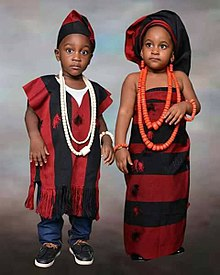


Idoma People
The Idoma are people that primarily inhabit the lower western areas of Benue State, Nigeria, and kindred groups can be found in Cross Rivers State, Enugu State and Nasarawa State in Nigeria. The Idoma language is classified in the Akweya subgroup of the Idomoid languages of the Volta–Niger family, which include Alago, Agatu, Etulo and Yala languages of Benue, Nasarawa and Northern Cross river states. . The Akweya subgroup is closely related to the Yatye-Akpa sub-group. The bulk of the territory is inland, south of river Benue, some seventy-two kilometers east of its confluence with river Niger. The Idomas are known to be 'warriors' and 'hunters' of class, but hospitable and peace-loving. The greater part of Idoma land remained largely unknown to the West until the 1920s, leaving much of the colorful traditional culture of the Idoma intact. The population of the Idoma is estimated to be about 4 million. The Idoma people have a traditional ruler called the Och'Idoma who is the head of the Idoma Area Traditional Council while each community has its own traditional chief such as the Ad'Ogbadibo of Orokam, Chief D.E Enenche. The Palace of the overall Och'Idoma is located at Otukpo, Benue State. The present Och'Idoma, HRH Elias Ikoyi Obekpa was installed into office in 1997 and the position is for life.Traditional history
The history of the Idoma people precedes the history of Benue state (created 1976) and the history of the Republic of Nigeria (created 1960). Oral tradition and dance is the primary method of which history has been passed in Idomaland and is considered a central cultural institution. From a young age Idoma children usually learn from their elders stories of old and are brought up around extended families, which make multiple historical resources available. When prompted Idomas generally will proudly tell you where they are from, and it’s not uncommon for Idoma to be able to recite at least four generations of their progenitors. Historically, being unable to answer the emblematic question “Who is your father?” disqualified one from important roles and titles in Idomaland. Quite naturally, a number of villages trace origins to single ancestors and further, several Idoma groups trace their heritage to one common ancestor, considered the “father” of the different groups. According to traditional history, Iduh, the father of the Idoma had several children who each established different areas. Hence the expression: “Iduh the father of Idoma.” “Iduh the father of Idoma Iduh who begot all the Idoma He also begot the following children: Ananawoogeno who begot the children of Igwumale; Olinaogwu who begot the people of Ugboju; Idum who begot the people of Adoka; Agabi who begot the people of Otukpo; Eje who begot the people of Oglewu; Ebeibi who begot the people of Umogidi in Adoka, Edeh who begot the people of Edumoga and Ode who begot the people of Yala ” While there may be some truth to the above, the Idoma cannot be said to have a unitary origin. Many Idoma groups and village subsets have their own histories complete with stories about how their people arrived at their current location. The Otukpa people descended from three ancestors: Owuno, Ameh-Ochagbaha and Oodo. The first two were brothers who migrated from Idah in Igalaland while Oodo migrated from Igbo land. As one can imagine, the ever-changing of people through time makes it difficult to study Idoma history.Scholarly history
Scholars have combined oral history with genealogical data and analysis of kinship totems to trace the roots of the Idoma people as a whole. One notable Idoma scholar E.O. Erim cites genealogical data, collected from most modern groups in Idoma suggesting that they derive from several ethnic groups, each with different historical origin. Furthermore, the available genealogies indicate the existence of diverse ethnic groups who descended from ancestors other than Idu. In several of these cases, the claim of common descent is backed by both extensive genealogical connections and possession of common kinship totems. Erim contends that while Idu was certainly a migration leader—he was not the “father” of the Idoma in the sense implied in the above traditions. These two considerations make it difficult to simply accept the view that every group in Idomaland is descended from Idu.Many Idoma kindred claim an ancestral homeland called Apa, north-east of present-day Idomaland due to pressures of Northern invaders as recently as 300 years ago. The historical Apa was part of the ancient Kwararafa Kingdom (Okolofa Kingdom), a confederacy of several peoples. Informants in other ethnic groups have corroborated existence of this kingdom, chiefly the Jukun who also believe they once ruled a confederacy called Kwararafa. In the Hausa book Kano Chronicle it is mentioned that Zaria, under Queen Amina conquered all towns as far as Kwarafara in the 15th century. At present, there is a Local Government Area in Benue State called Apa and is said to be the home of those who made the first migration from the historical kingdom. For many Idoma nationalists today, the name Apa elicits sentiments of a past glory, and some in the political sphere have gone as far as suggesting it should become the name of a new Idoma state.
Other scholars point to historical and linguistic evidence that suggests that Idoma have ties with the Igala people to the west, concluding that the two nations came from a common ancestor. Angulu(1981) note that Igala and Igbo have important historical, ancestral and cultural relationships. Eri is said to be the original legendary cultural head of the Umu-eri, a subgroup of the Igbo people. Eri migrated from southern Egypt through the Igala area, settled, and established a community in the middle of Anambra river valley (at Eri-aka) in Aguleri where he married two wives. The first wife, Nneamakụ, bore him five children. The first was Agulu, the founder of Aguleri (The ancestral head of Eri Kingdom clans) (the Ezeora dynasty that has produced 34 kings till date in Enugwu Aguleri), the second was Menri, the founder of Umunri / Kingdom of Nri, followed by Onugu, the founder of Igbariam and Ogbodulu, the founder of Amanuke. The fifth one was a daughter called Iguedo, who is said to have borne the founders of Nteje, and Awkuzu, Ogbunike, Umuleri, Nando and Ogboli in Onitsha. As one of the children of Eri, Menri migrated from Aguleri, which was and still is, the ancestral temple of the entire Umu-Eri (Umu-Eri and Umu-Nri). His second wife Oboli begot Ọnọja, the only son who founded the Igala Kingdom in Kogi State.[2] Among this group, there are those who believe both ethnic groups fled the same kingdom at some point in history. Many traditional Idoma spiritual chants and “secret” tongues spoken during traditional ceremonies are actually Igala dialects and there are some Idoma themselves who assert their Igala ancestry. There are yet other Idoma groups notably in the southern regions, which claim their ancestors arrived at their present location from Northern fringes of Igboland as a result of land disputes. Scholars believe these people had most likely fled Apa too, settled and resettled.
As suggested, a number of factors make it difficult to study Idoma historical origins of the Idoma people as a whole. In any event, it could be said that despite their heterogeneous origins, trading, marriage, language and other interactions among the Idoma have cultivated traditions and shaped a rich cultural identity distinctly their own.
Idege People
The Igede people are a Nigerian ethnic group in Lower Benue State of Nigeria. They are native to the Oju and Obi local government areas of Nigeria, where 2006 population figures stand at an estimated 267,198 people. However, many Igede people are dispersed across the state and the Nation. For instance, the Igede language is also spoken in Nigeria's Cross River State, and many Igede communities exist in Osun State and Ogun State. The Igede language is a member of the Benue-Congo subgroup of the Niger-Congo language family. The Oju Local Government Area was created in 1976 and shares boundaries with present-day Obi, Ado, Konshisha and Gwer East Local Government Areas of Benue State, Ebonyi and Izzi Local Government Areas of Ebonyi State, and Yala Local Government Area of Cross River State. It is headquartered in Oju Town.Geographical Location
The Obi local government area was created in 1996 and has its headquarters at Obarike-Ito. The local government area derives its name from the Obi stream that flows in the area and shares boundary with Ado, Otukpo and Oju local government areas of Benue State.
Igede Culture
The Igede are predominantly farmers cultivating maize, cassava, groundnut and yams. Igede is home of the popular Igede-Agba festival, a colourful annual celebration that marks the yam harvest season in September.[8] Much importance is attached to yam amongst the Igede people and other Biafran cultures not only because it is the first crop to be harvested, but also the most important and palatable crop. The crop can be eaten in different forms – roasted, boiled, pounded, floured, fried, etc. The New Yam Festival is therefore a celebration depicting the prominence of yam in the social-cultural life of the Igede people and all Agba Descendants such as the Obudu and Bekwara people. The emphasis being placed on yam by the Agba sons is not out of place as research has shown that yam has a lot of health and economic benefits. Yam, according to scholars, provides 200 calories of energy per capita daily. The demand for yam is higher than the supply of the crop because it occupies a very prestigious social and religious status in the country and so can be regarded as the "KING OF ALL CROPS"Besides, the Igede Agba Festival serves as the most important day to a typical Igede man and Agba Descendants as it is the only celebration that creates a sense of nationalism in the descendants of Agba. It is the best platform through which families show love, sense of belonging, unity, communalism and harmonious living. No traditional ceremony among the Agba sons and daughters occupies a more prominent position than the Igede Agba – it is not intended at appeasing any deity (such as “Apang”), but meant to celebrate hard work, dignity of labour and magnanimity as well as elicit resilient spirit which spur farmers to putting in more effort in the next planting season. Igede traditional clothes are blue, black, and white stripes.
NATIONAL MATTERS
 SENATOR ABBA MORO GIVING A TALK IDOMA PATRIOTS INTHE U.S.A
12-09-2019
 Comrade Encourages Eduacation
01-09-2010
 A visit to the U.S.A
12-09-2019
 Sentor Abba meets with his predecessor and Gov. Wike
12-09-2019